🧼 Email List Hygiene & Suppression: The Overlooked Keys to Email Deliverability
You can have the most beautifully designed emails, compelling subject lines, and perfectly timed campaigns…
But if your email list hygiene is poor, none of that matters.
Because bad lists = bad deliverability.
Let’s break down what list hygiene really means, how it connects to suppression, and why both are non-negotiable if you want to stay out of the spam folder.
Key Takeaways
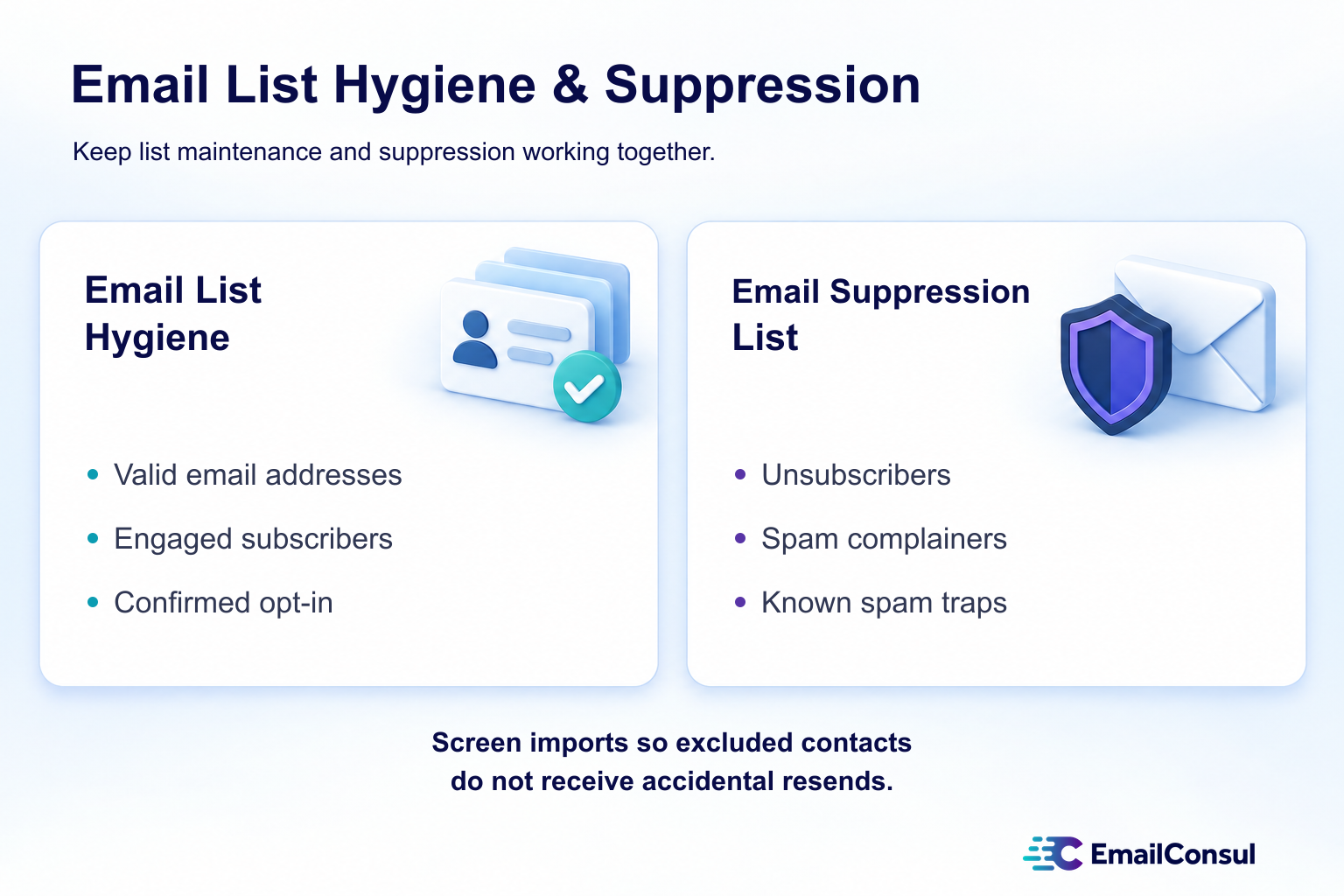
- Keep list maintenance and suppression working together.
- Check invalid addresses, complaints, and engagement in context.
- Screen imports so excluded contacts do not receive accidental resends.
💡 What Is Email List Hygiene?
List hygiene is the process of regularly cleaning, updating, and maintaining your email list so you focus on valid email addresses and engaged subscribers.
It’s not just about deleting old contacts. It’s about proactively removing or suppressing the ones that harm your sender reputation, damage your metrics, and trigger spam filters.
Poor hygiene leads to:
- High bounce rates
- Low open/click rates
- Spam complaints
- Blacklisting
- Lower inbox placement
All of which tell mailbox providers (like Gmail, Yahoo, Outlook):
“This sender is risky. We should send their emails to spam.”
🚫 What Is an Email Suppression List?
A suppression list is a database of contacts you’ve chosen not to email – either permanently or temporarily. These may include:
- Unsubscribers
- Bounced emails (hard and repeated soft bounces)
- Spam complainers
- Inactive users
- Role-based emails (e.g., info@, sales@, admin@), depending on permission, mailbox purpose, behavior, and your ESP’s policy
- Known spam traps
Deleting a contact is not the same as retaining the minimum information needed to honor a marketing opt-out. Keep enough to screen future imports against that exclusion. (ICO preferences guidance)
Suppression isn’t punishment – it’s protection.
By suppressing risky contacts, you avoid harming your sender reputation, triggering blocks, or ending up on deny lists.
Think of it like this: a suppression list is a firewall between you and deliverability disaster.
🧠 Why List Hygiene Matters for Deliverability
Repeated bounces, spam complaints, and poor engagement are reasons to investigate delivery risk. Open rates alone do not reliably diagnose spam placement. (Gmail sender guidelines)
Good hygiene = strong signals.
Bad hygiene = warning signs.
And once your sender reputation takes a hit, even your best content might never see the light of inbox.
✅ Email List Hygiene Best Practices
Here’s what consistent, proactive list hygiene looks like:
- Validate emails at point of entry
Use email verification to catch typos and invalid entries before they enter your system. It does not prove permission or identify every spam trap. Use confirmed opt-in to check subscription intent and address control. (Spamhaus guidance; Gmail subscription guidance) - Monitor bounces closely
Hard bounces = remove immediately. Soft bounces = monitor. If repeated (3–5 times), suppress. - Suppress non-engagers
If someone hasn’t opened or clicked in 90–180 days (depending on your sending volume), move them to an inactive segment or suppression list.
Treat 90–180 days as a review window, not a universal rule. Consider your sending cadence and buying cycle. Opens can be recorded without engagement, so consider trustworthy clicks, replies, or purchases where available and appropriately collected. Move inactive users to an inactive segment or suppression list. (Apple Mail Privacy Protection; Mailchimp inactivity guidance) - Run re-engagement campaigns
Give eligible, still-subscribed people one last chance to re-engage, with a clear CTA like “Still want to hear from us?” Exclude opt-outs, known complainants, and invalid addresses. (ICO preferences guidance) - Respect unsubscribes
Honor the email marketing opt-out and automate the unsubscribe process promptly.
Never email people who opted out. It’s not only unethical – it’s illegal in many regions (GDPR, CAN-SPAM, etc.) - Avoid purchased lists
Always build organically. Purchased lists are toxic for sender reputation. - Use suppression lists during imports
When migrating lists between platforms or CRMs, always cross-check with your suppression database to avoid accidental resends. Preserve the reason and relevant scope of the exclusion across your CRM and sending platform.
📊 Metrics to Watch
List hygiene improves more than just deliverability. Clean lists lead to:
- Higher open and click-through rates
- Fewer complaints
- Better conversion rates
- More reliable A/B test data
- Lower unsubscribe rates
- Long-term sender reputation growth
It’s not about sending more. It’s about sending smarter.
🧩 Final Thought
Marketers often obsess over subject lines, design, or send times – but your email list is your foundation.
And if your foundation is rotting, the whole system eventually collapses.
Healthy list = healthy deliverability = better results.
Don’t wait for blacklists, blocks, or plummeting open rates to take action.
Prioritize hygiene and suppression now, before list problems grow.
Explore EmailConsul
Put email list hygiene best practices at the heart of your email marketing process: check email addresses, use confirmed opt-in, and review engagement and spam complaints in context. Keep your email suppression list up to date so excluded contacts do not receive accidental resends, while focusing on engaged subscribers. Explore EmailConsul with a free trial or book a demo.